High-Velocity Devotion
Carlos Santana and John McLaughlin’s Supreme Love

One song, one album, and the stories in between. Curated dispatches from the front row of the jazz scene—without pretension—to enable your musical discovery.
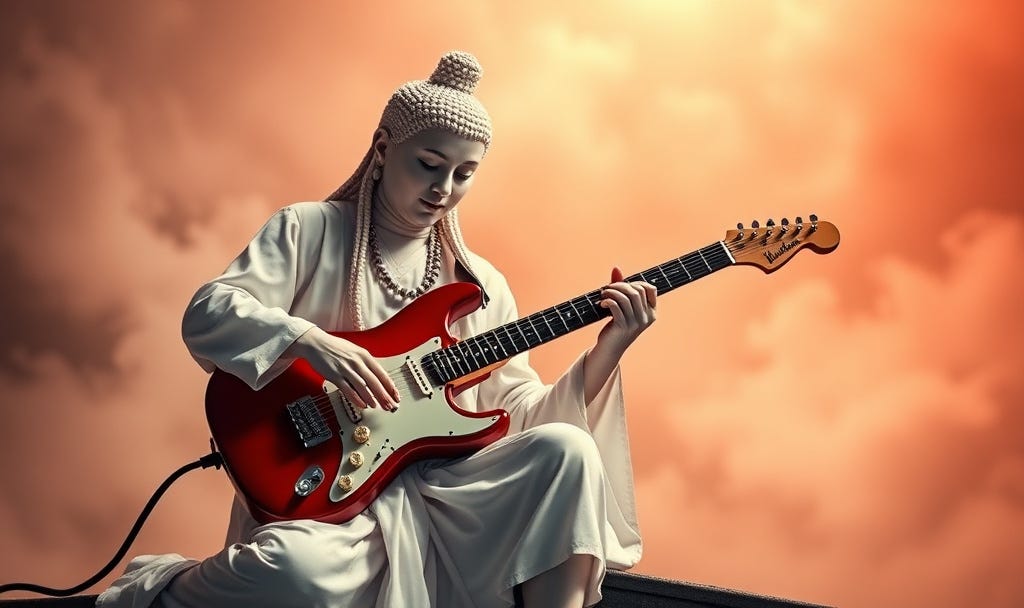
Crossing the Bridge to Jazz
In the 90s, my musical world was built on a heavy rock and long-form improvisation. I was living in the sounds of the Grateful Dead, Pink Floyd, and the power of Led Zeppelin. Jazz was a distant shore I’d visited a few times—I knew I wanted to go back and explore more.
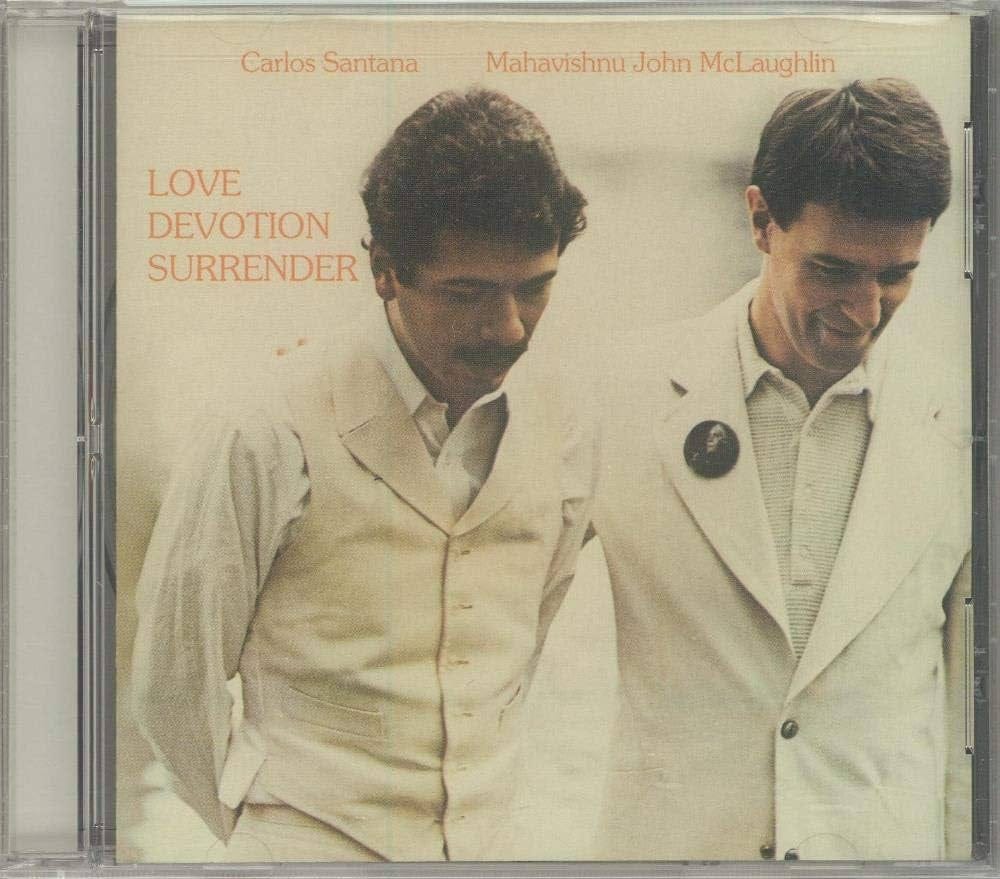
If Louis Armstrong was “Gateway Jazz,” then Love Devotion Surrender was the “Bridge.” This wasn’t polite dinner music. It’s two rock icons translating the spiritual language of John Coltrane. I listened to this album over and over in college. After college, I put it on for friends. It wiggled back into my queue last month, and I’m listening to it again now.
One Album: Love Devotion Surrender (1973)
This album didn’t teach me jazz. It taught me a way to hear it. I think of Love, Devotion, Surrender simply, as a positive ripple effect of John Coltrane. At the time, not everyone agreed:
Robert Christgau, The "Dean of American Rock Critics" gave it a B-. In his Consumer Guide, he famously mocked the cover art (describing Carlos as looking like "he's about to have a Supreme Court case named after him") but admitted the music had power.
Jazz critic Charles Le Vay wrote that the uptempo treatment of "A Love Supreme" would have Coltrane "turning in his grave." He found the "lick-swapping" between the two guitarists embarrassing, calling Santana a "master of the one-note samba" who couldn't keep up with McLaughlin’s "Mahavishnu" speed.
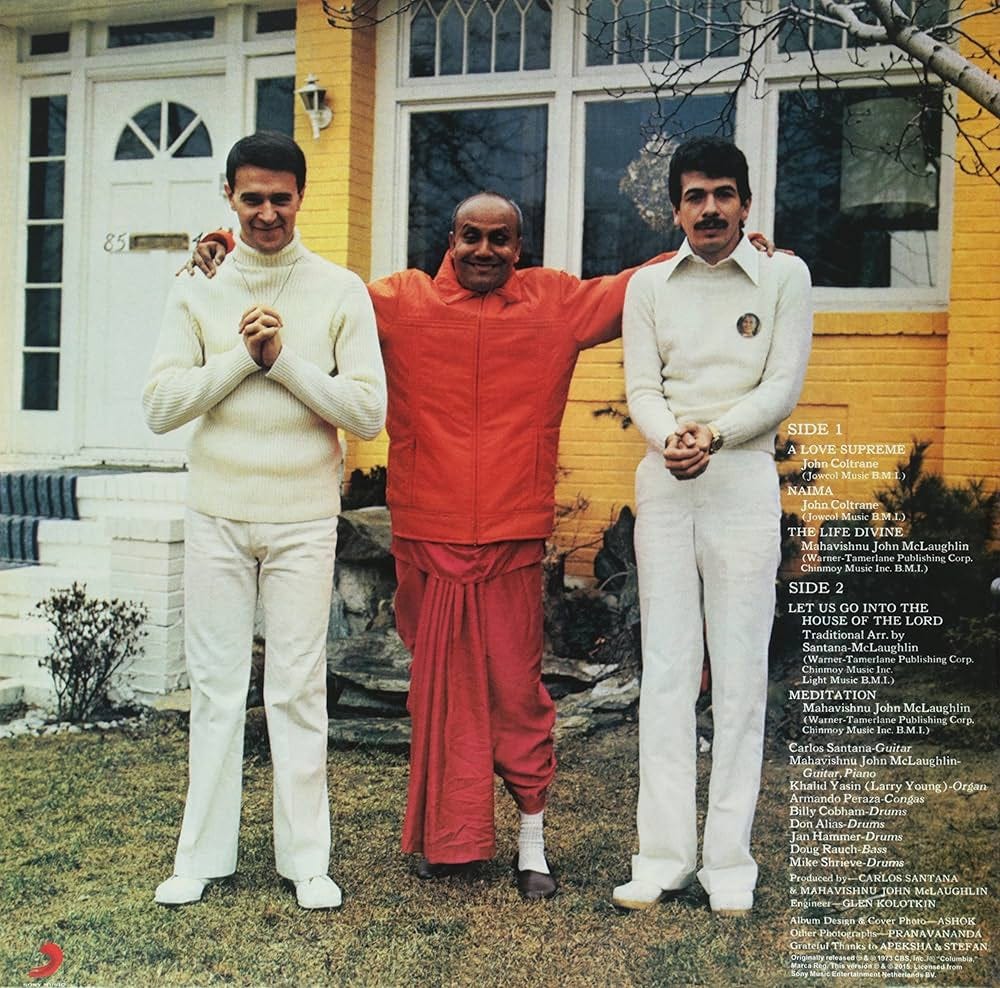
I do get why it was a curveball. Santana, a global rock star, appeared on the back cover in an all-white suit alongside John McLaughlin, a recent disciple of the guru Sri Chinmoy. They weren’t playing “Black Magic Woman.” They were chasing enlightenment through 38 minutes of high-velocity devotional fire.
Listening Note: While the guitars get the headlines, Larry Young (Khalid Yasin) is the glue on the organ. He provides the “sheets of sound” that keep the session from flying off the tracks.
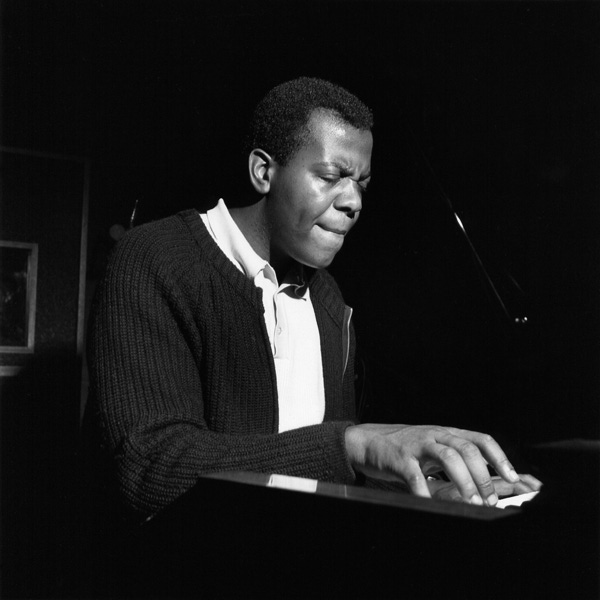
Maybe the jazz establishment wasn’t ready for Coltrane to be played this way? For someone like me coming from Zeppelin and the Dead, it helped it click. I think the appeal is unfiltered intensity and that it bridges that gap between the Dead’s extended jams and the intense, searching devotion of the jazz masters.
One Song: “A Love Supreme”
Covering Coltrane may have been a massive risk, but Santana and McLaughlin weren’t looking for approval; they were looking for a higher gear — spiritually. While Coltrane’s original 1964 version is a slow-burn meditation, this is a sprint. They take the iconic four-note bass hook and turn it into a high-speed mantra.
Listening note: I like the version on the album better and it’s cool to see them in the video version.
Liner Notes: The Path to Enlightenment
The Coltrane Connection: They weren't just covering Coltrane; they were using his songs as a liturgy. It wasn't about hero worship—it was about two rock stars trying to find the same 'Supreme' frequency that Coltrane played on.
A Rose By Any Other Name: During this era, Santana was given the name “Devadip” (meaning “The lamp of the light of God”) and McLaughlin was “Mahavishnu” (”Great Vishnu”). The all-white outfits on the cover were a badge of their shared devotion to Sri Chinmoy. The music was a literal extension of their meditation—a "Supreme Love" expressed through electricity and vibration.

Music as a Path: For both men, the guitar was a tool for “cleaning the mirror”—a concept Coltrane often spoke of. The idea was that the more you practiced and the deeper you played, the closer you got to the “Supreme” truth.
The Meeting of the Spirits: The session featured a “project band” made up of members from both the Santana band and the Mahavishnu Orchestra. It was a moment where the worlds of rock and jazz fusion truly became one.
Looking back, Love Devotion Surrender, wasn’t a turning point. It was the stretch of road where I stopped turning back.